
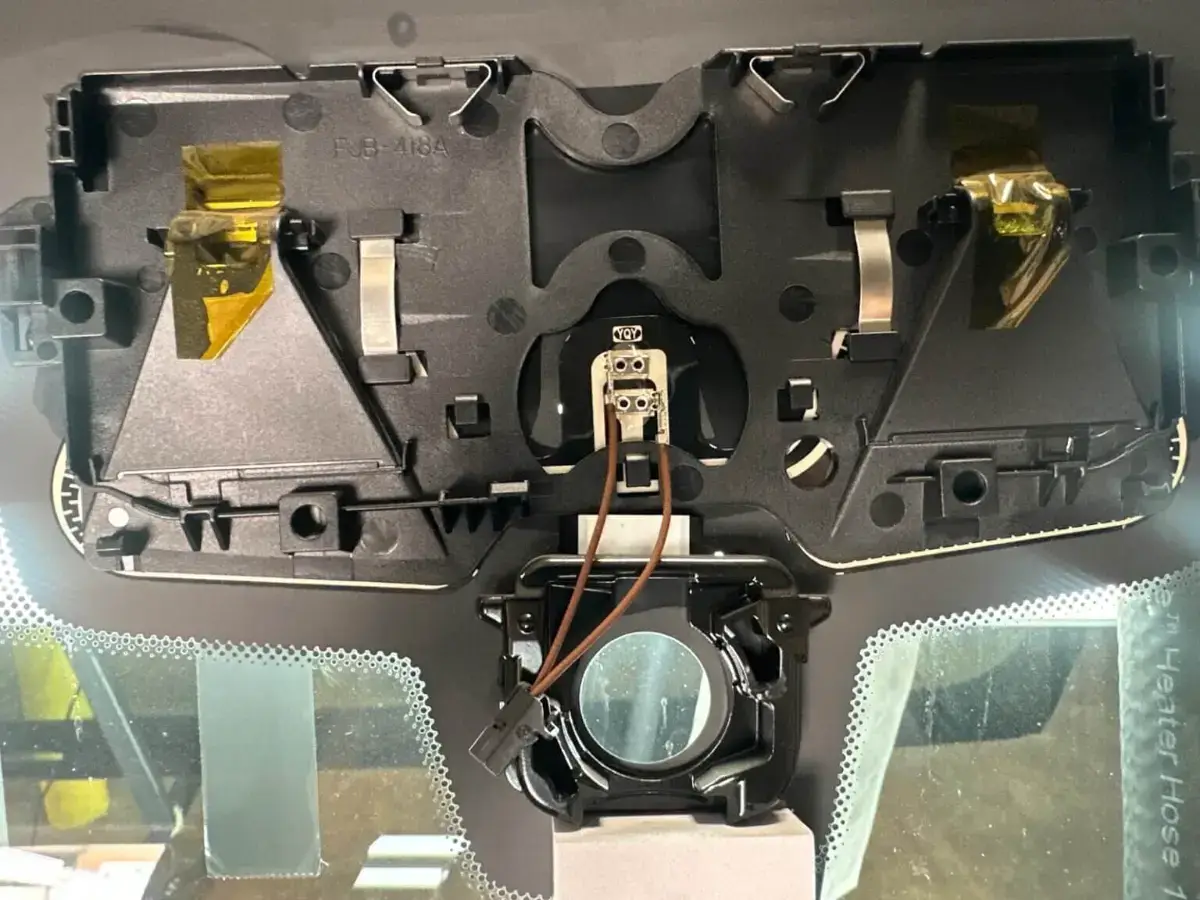
If your car was built in the last several years, there is a good chance a small camera sits behind the windshield, just below the rearview mirror. That camera powers features like lane-keeping assist and automatic emergency braking. When the windshield is replaced, the camera has to be aimed again so those features work correctly. That process is called ADAS calibration, and skipping it can put you at risk without you even noticing.
What ADAS Means
ADAS stands for Advanced Driver Assistance Systems. These are the safety features that watch the road for you, such as:
- Lane departure warning and lane-keeping assist
- Forward collision warning and automatic emergency braking
- Adaptive cruise control
- Traffic sign recognition
- Automatic high beams and rain-sensing wipers
Many of these systems use a forward-facing camera mounted to the windshield. Some also use radar sensors in the grille or bumper.
Why a New Windshield Requires Calibration
The camera looks through the windshield, so the glass is part of the system. A new windshield can sit a fraction of a millimeter differently than the old one, and the camera bracket is moved during installation. A shift that small can make the camera look at the road at a slightly wrong angle. At highway speed, an angle that is off by just one degree can mean the system judges lane lines or the distance to the car ahead incorrectly.
That is why carmakers call for calibration after a windshield replacement. Calibration may also be needed after a wheel alignment, a suspension repair, or a minor front-end collision.
Static vs. Dynamic Calibration
There are two main methods, and some vehicles need both:
- Static calibration is done in the shop. The car is parked on a level floor and a target board is placed at an exact distance in front of it. A scan tool tells the camera to read the target and set its aim.
- Dynamic calibration is done on the road. A technician connects a scan tool and drives the car at set speeds on well-marked roads until the camera finishes learning.
The method depends on your make and model. We follow the manufacturer’s procedure for every vehicle and confirm the result with a scan tool.
Signs Your Camera Needs Calibration
- A warning light or message about lane assist, collision warning, or the camera
- Lane-keeping steers you toward the line instead of away from it
- Collision warnings that go off for no reason, or not at all
- Adaptive cruise control that brakes or speeds up unexpectedly
Sometimes there is no warning at all, which is why calibration should be done every time the windshield is replaced, not only when a light comes on.
ADAS Calibration at My Safe Auto Glass
We calibrate cameras as part of our windshield replacement service, so you do not need a second appointment at the dealer. In most cases the calibration takes about an hour. We tell you before the job whether your vehicle needs static, dynamic, or both, and most insurance policies cover calibration as part of the claim. Learn more on our ADAS windshield calibration page, or see how claims work on our insurance page.
Frequently Asked Questions
Do I need ADAS calibration after windshield replacement?
If your car has a windshield-mounted camera for features like lane-keeping or emergency braking, yes. Carmakers require calibration after the windshield is replaced.
How long does ADAS calibration take?
Most calibrations take about an hour. Some vehicles need both a static and a dynamic calibration, which can take longer.
What happens if I skip calibration?
The camera may misjudge lane lines or the distance to other vehicles, so safety features could react late, too early, or not at all.
Does insurance pay for ADAS calibration?
Most insurers cover calibration as part of a covered windshield replacement. We include it in the claim.
Does chip repair require calibration?
Usually not, because the windshield and camera bracket are not removed. Calibration is needed after a full replacement.
Get Help From My Safe Auto Glass
Replacing a windshield on a car with lane assist or emergency braking? We handle the glass and the calibration in one visit. Call (469) 789-4106 for a free quote. We offer mobile service across Dallas-Fort Worth and in-shop service in Richardson.